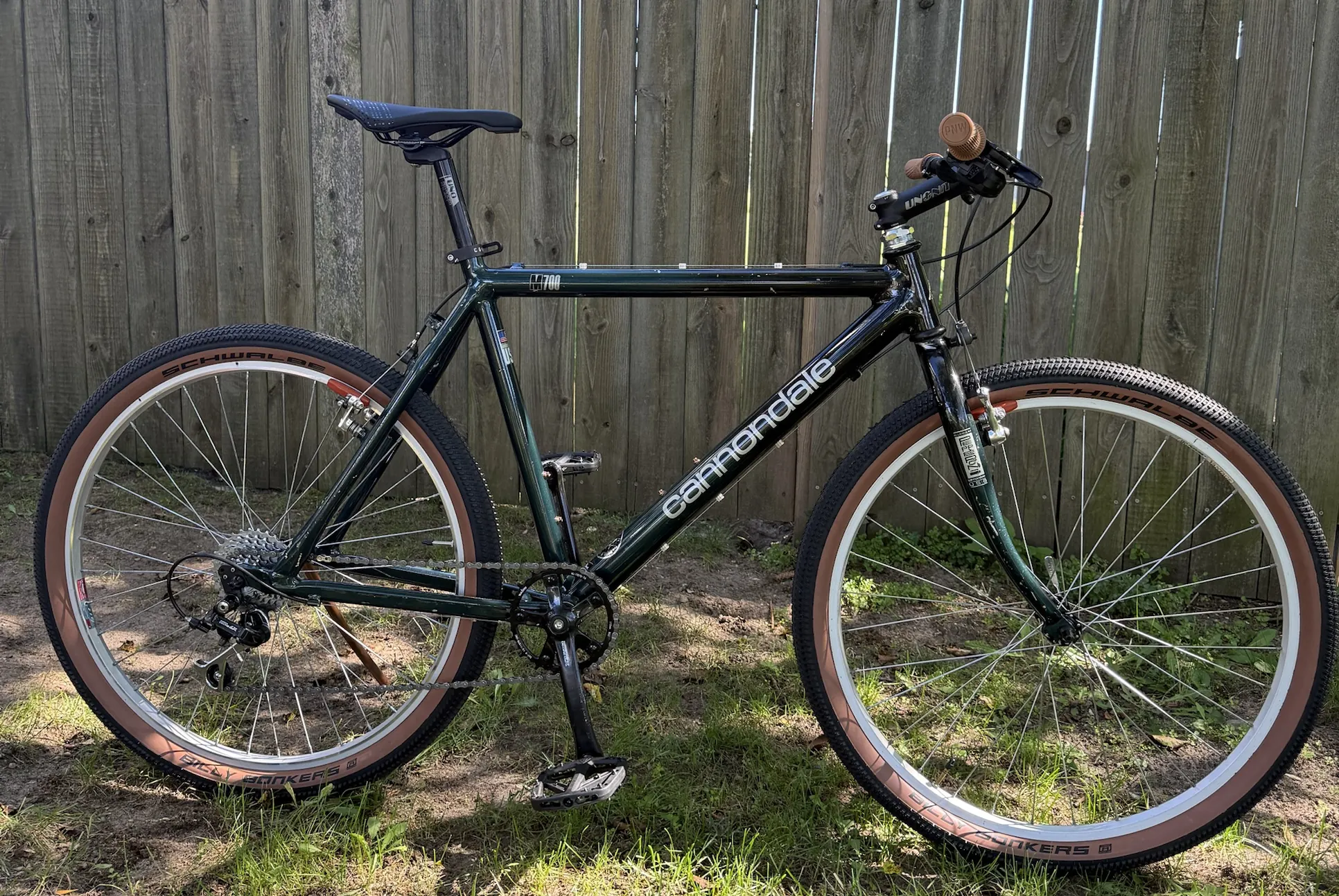
Mostly aluminum
I found it on Facebook Marketplace an hour and a half away; luckily we were going to be camping near there. The catch: we wouldn't be there for three and a half weeks.
Three and a half weeks is a long time for a $135 Cannondale to sit on Marketplace. It sat.
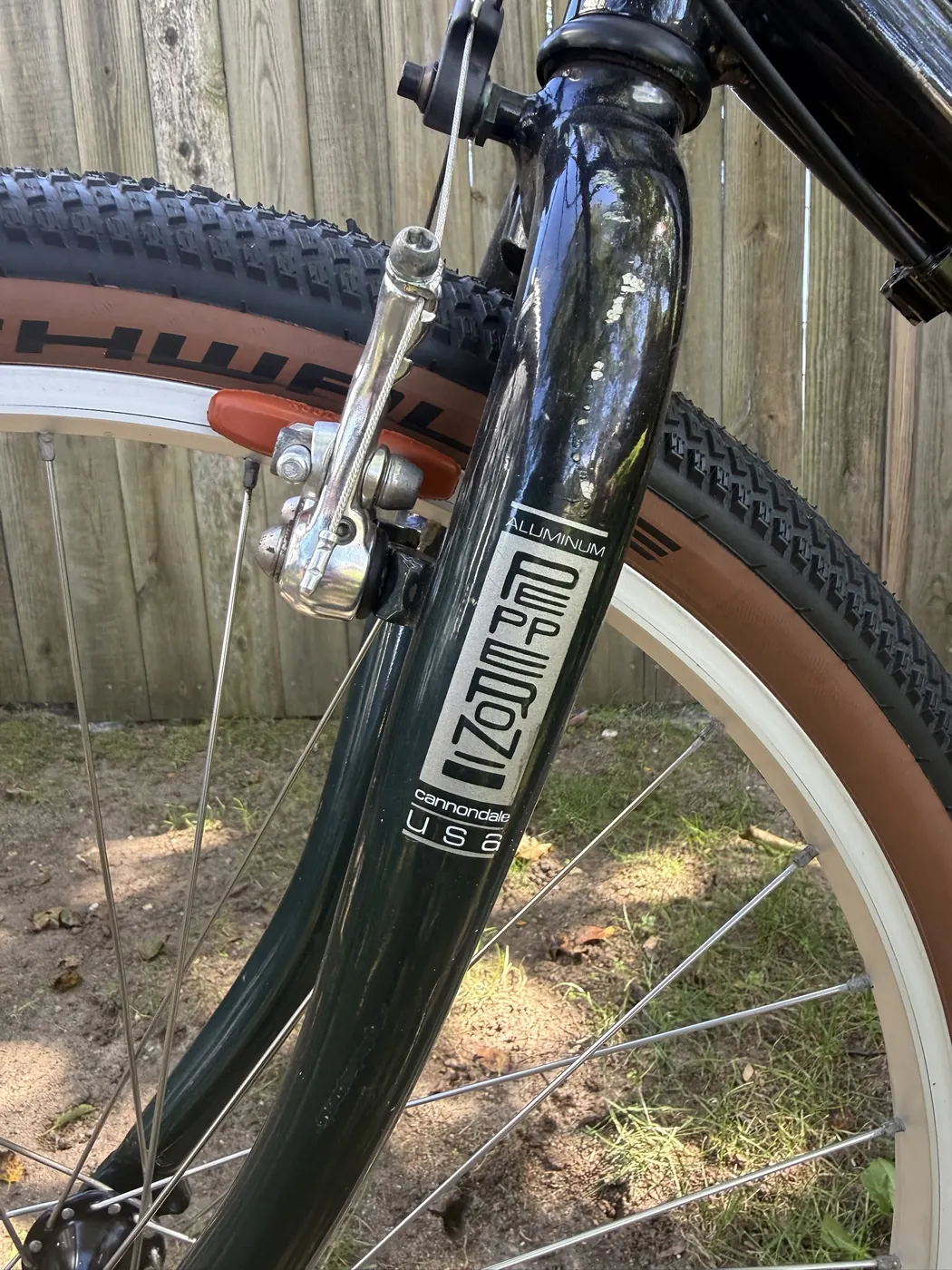
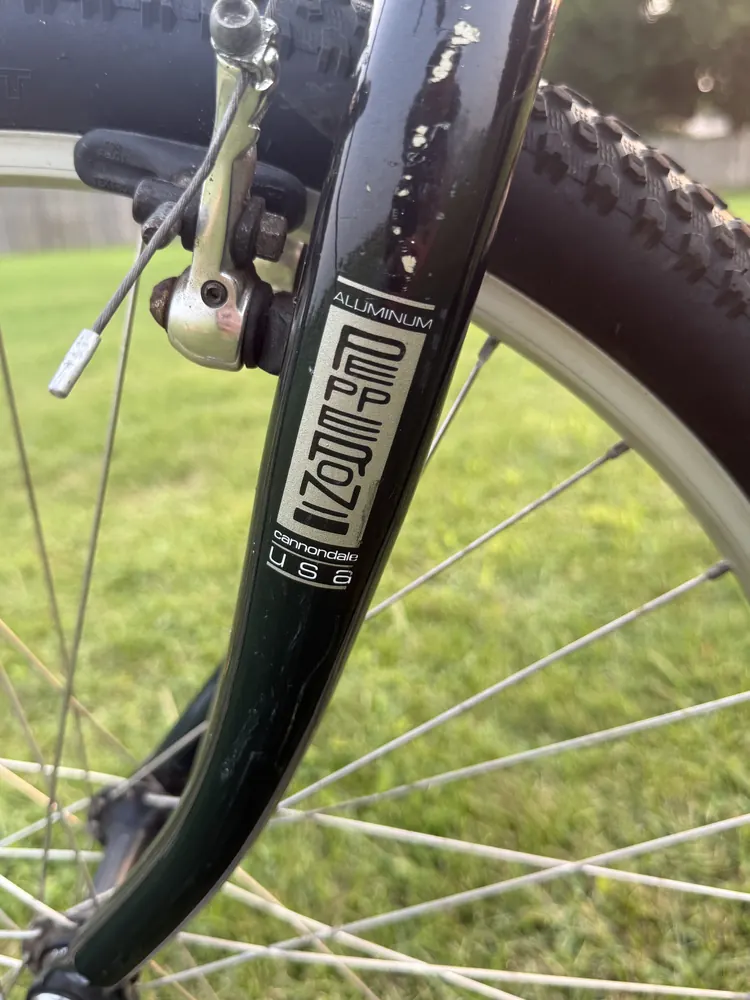
The first thing you notice is the fork. It says ALUMINUM right on it, in capital letters, over the name of a pizza topping. The 1993 catalog calls it all-aluminum. A magnet from my fridge had a different opinion.
So what happened between the catalog and my garage?
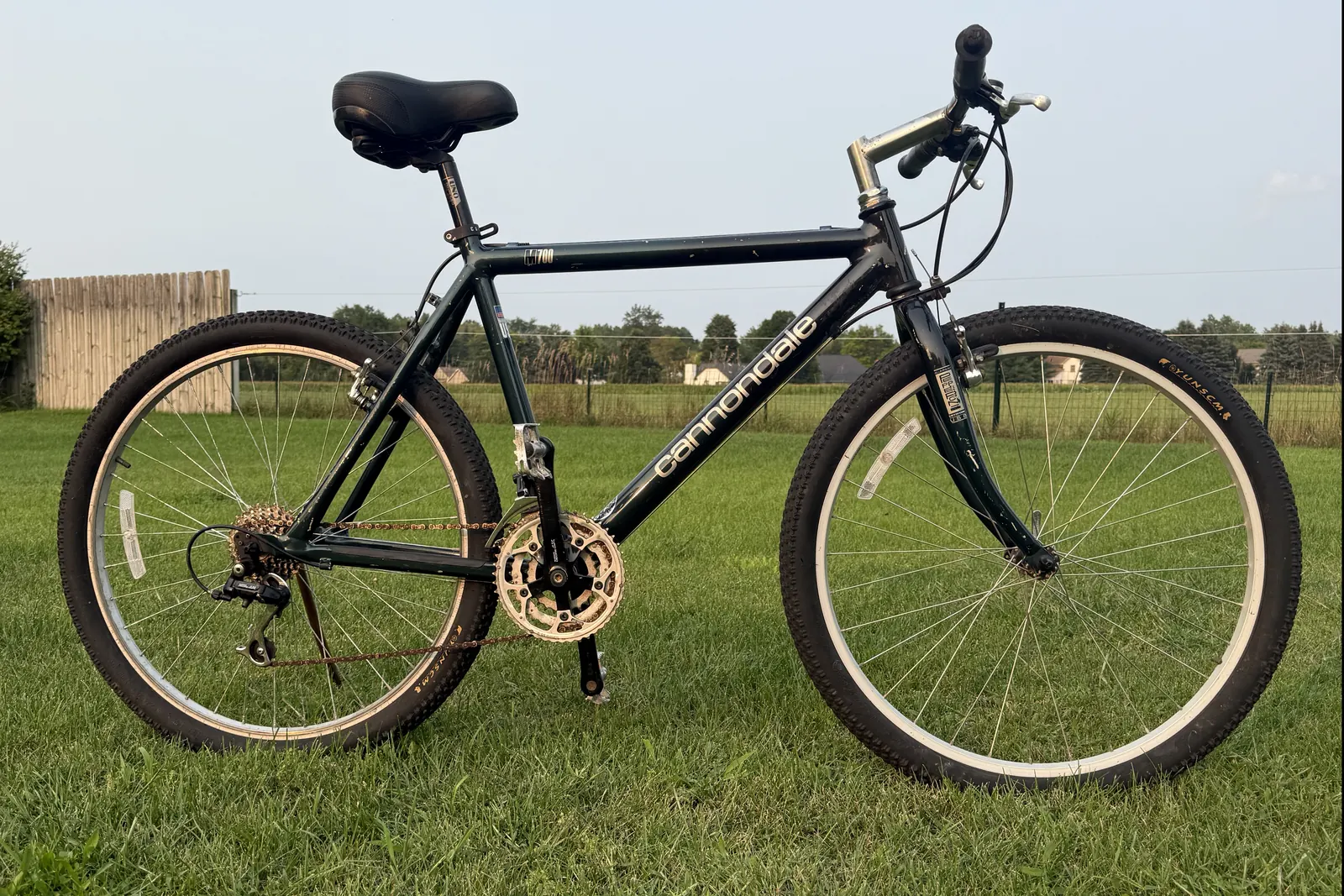
As found
What came home was a 20-inch M700 in black fading to green metallic, the kind of paint that shows its flake up close and its age everywhere else. Chips on the stays, the top tube, the fork. The decals made it: cannondale down the down tube, M700 on the top tube, a little American flag on the seat tube.
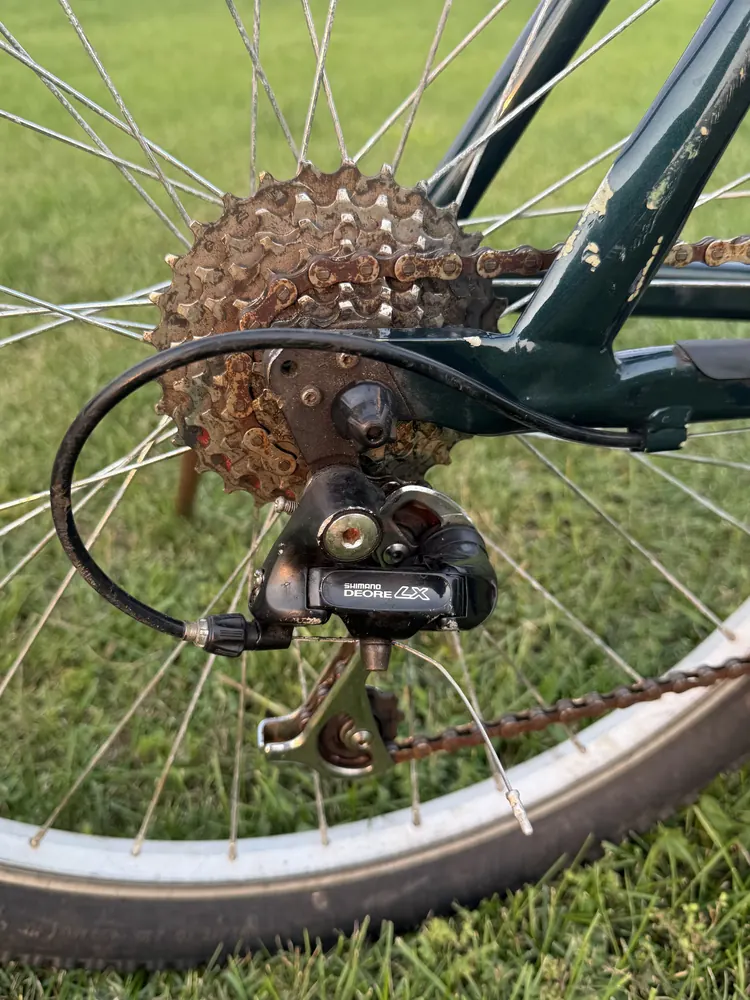
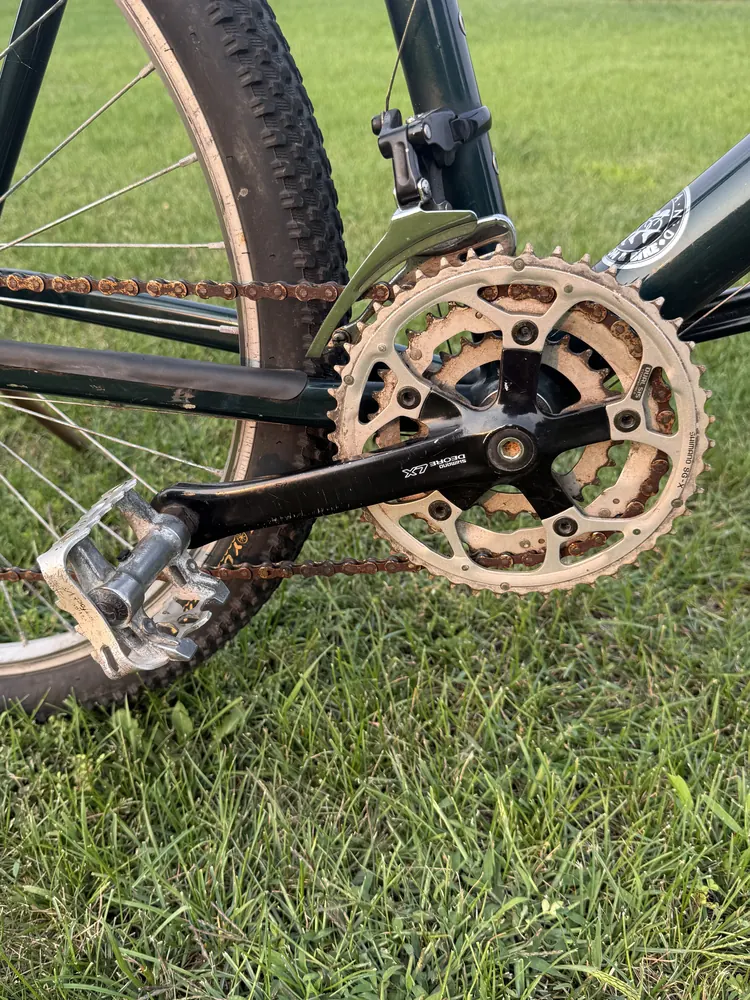
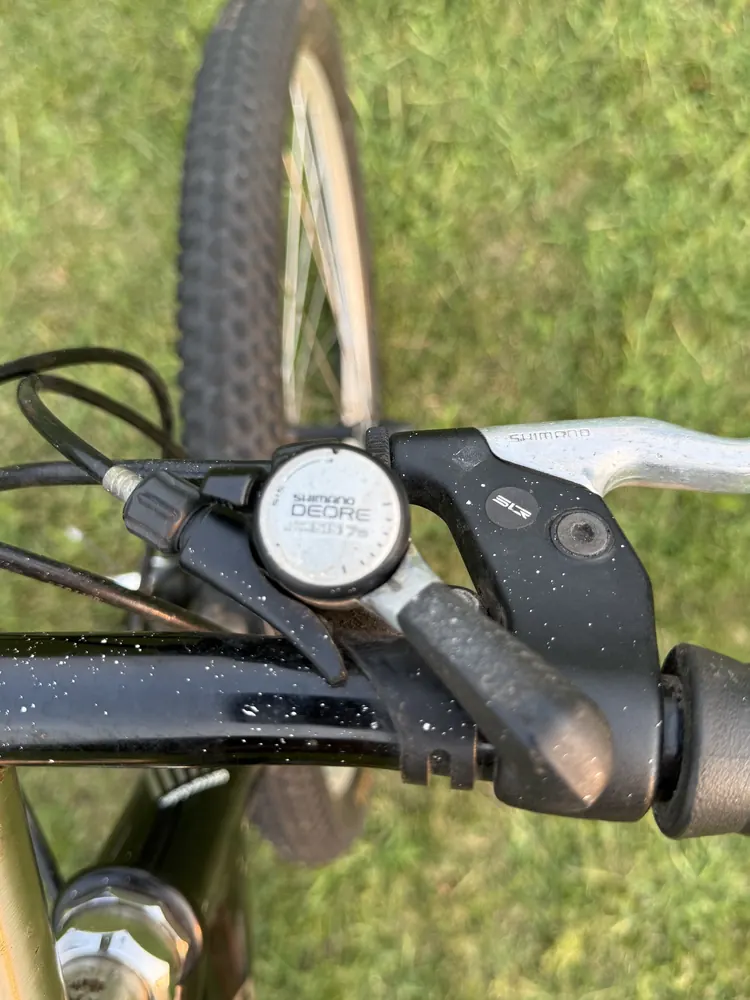
A lot of the original parts made it too. Deore LX derailleurs and crank. Deore thumb shifters. CODA cantilever brakes, which turned out to be Cannondale's own component line. A Ritchey rim up front.
The rest showed how the bike had been living: a wide comfort saddle, platform pedals, worn-out grips, and a chain and cassette rusted the color of old brick. It wasn't a collector's bike. Somebody had been riding it.
And one sticker that looked better than everything else on the bike.
Island Triathlon & Bike
It's on the down tube: a silver triathlete mid-stride, a bike wheel behind him, the letters I.S.L.A.N.D. arched over the top. Crisp. Not a crack in it.
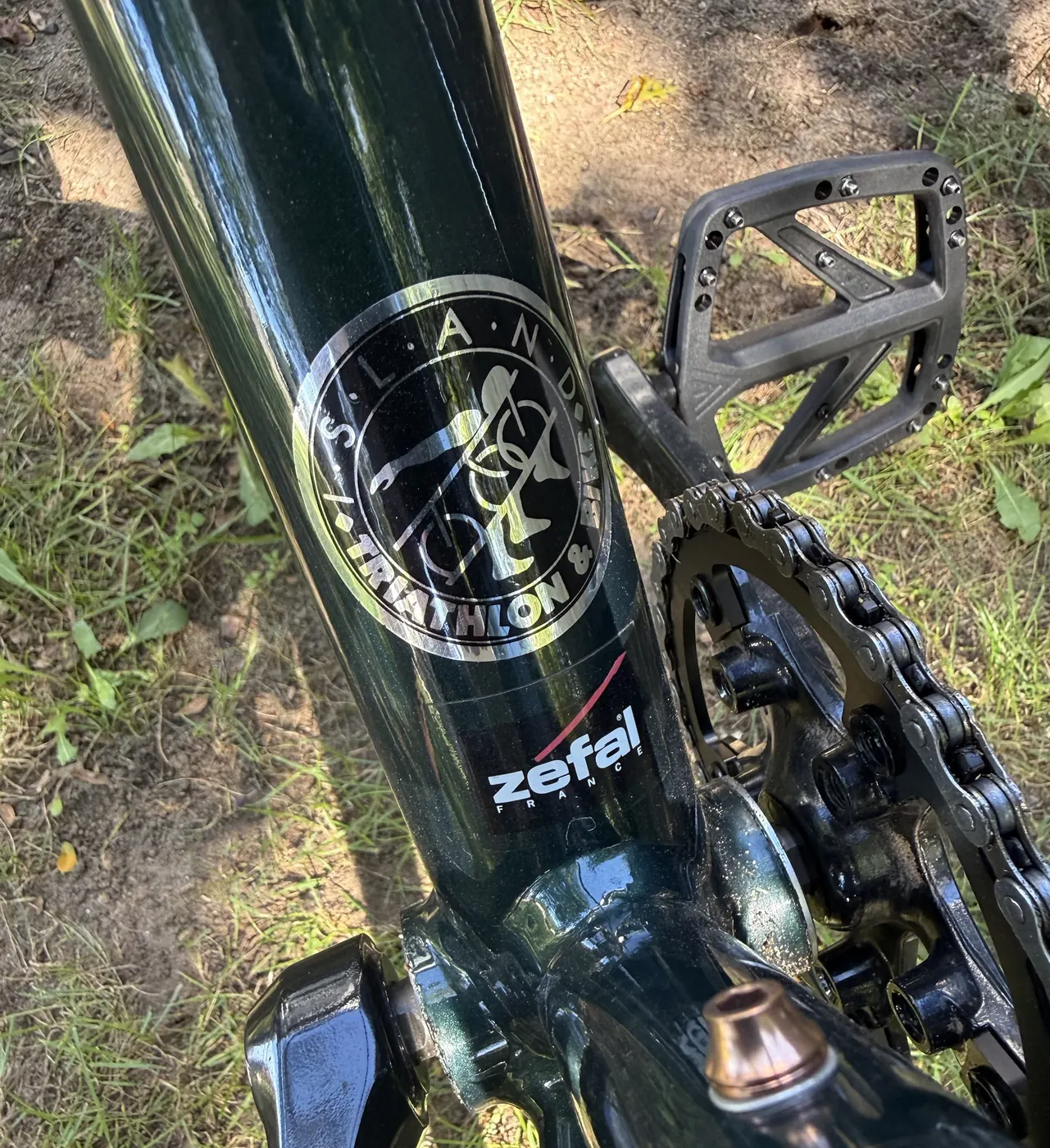
A quick search, and there it was. Island Triathlon & Bike opened in 1984 on Kapahulu Avenue in Honolulu, a few blocks from Waikiki. Sales, rentals, repairs, Tuesday group climbs up Tantalus. The storefront's closed now. The name lives on as a cycling apparel brand, ITB Hawaii.
The shop closed a while back. The sticker didn't get the memo.
Shops in the '90s stuck their decal on the bikes they sold, so there's a good chance this M700 started its life on Oahu. (Shops also stuck them on bikes they fixed, so "sold new in Honolulu" stays a maybe until someone who was there can say.) How it got from Hawaii to a Marketplace listing outside Howard City, Michigan, more than 4,000 miles later, I have no idea. It didn't ride here. Probably.
I'd love to find out.
Is the fork okay?
Before I put real money into this bike, I wanted to know one thing: was the front end going to stay attached to the rest of it?
Turns out Cannondale recalled Pepperoni forks with aluminum steerer tubes built between August 1991 and August 1992, bikes sold as 1992 M700s, M800s, M1000s and M2000s, plus some early '93s. The steerer could separate from the fork. The fix was to send it back to Cannondale for a steel one.
- Affected
- Pepperoni forks with aluminum steerer tubes
- Built
- August 1991 – August 1992 (1992 M700, M800, M1000, M2000; some early 1993)
- Concern
- Steerer separating from the fork
- Fix
- Return to Cannondale; aluminum steerer replaced with steel
- The test
- Magnet on the blades: nothing. Magnet on the steerer: it stuck.
But the catalog says all-aluminum, so somewhere between the catalog and this bike, something changed. What was missed?
Checking the catalog
Cannondale's 1993 catalog is archived online at VintageCannondale.com, and the M700 gets a full page with a full parts list. I laid it next to the bike and went down the list.
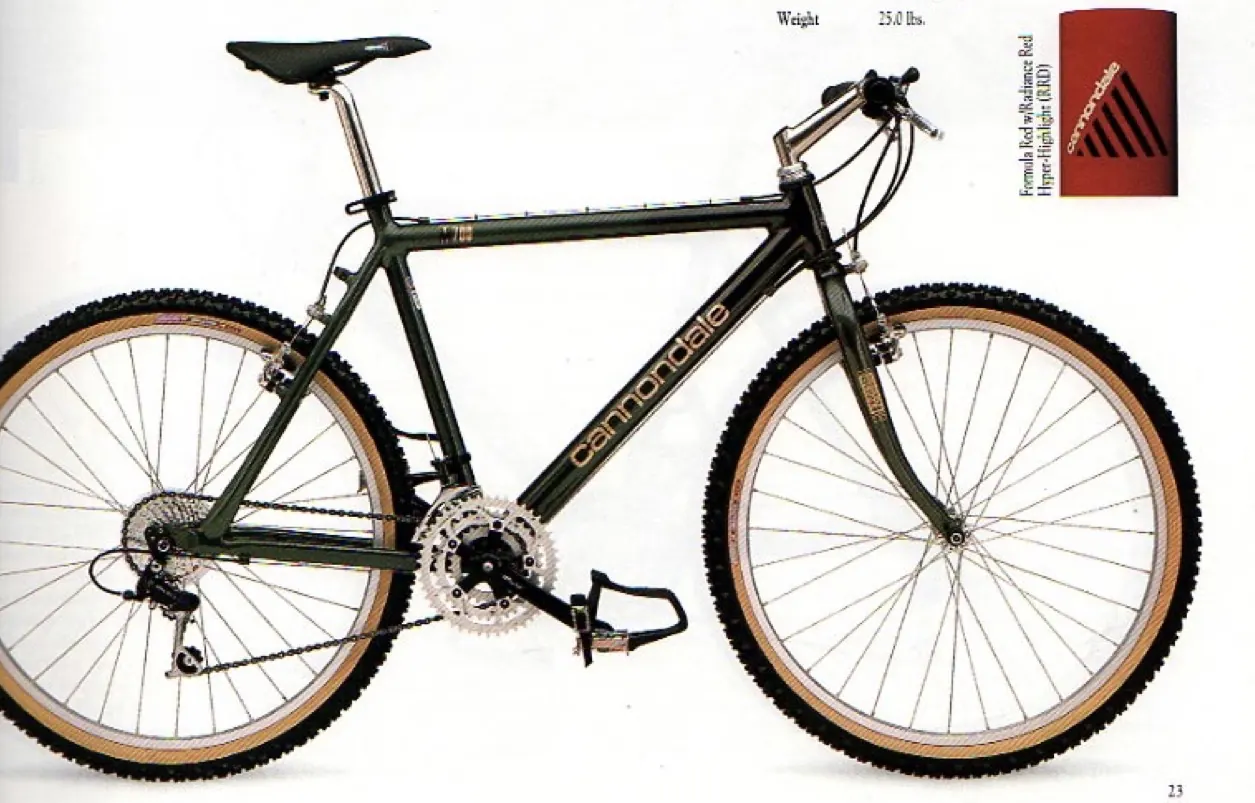
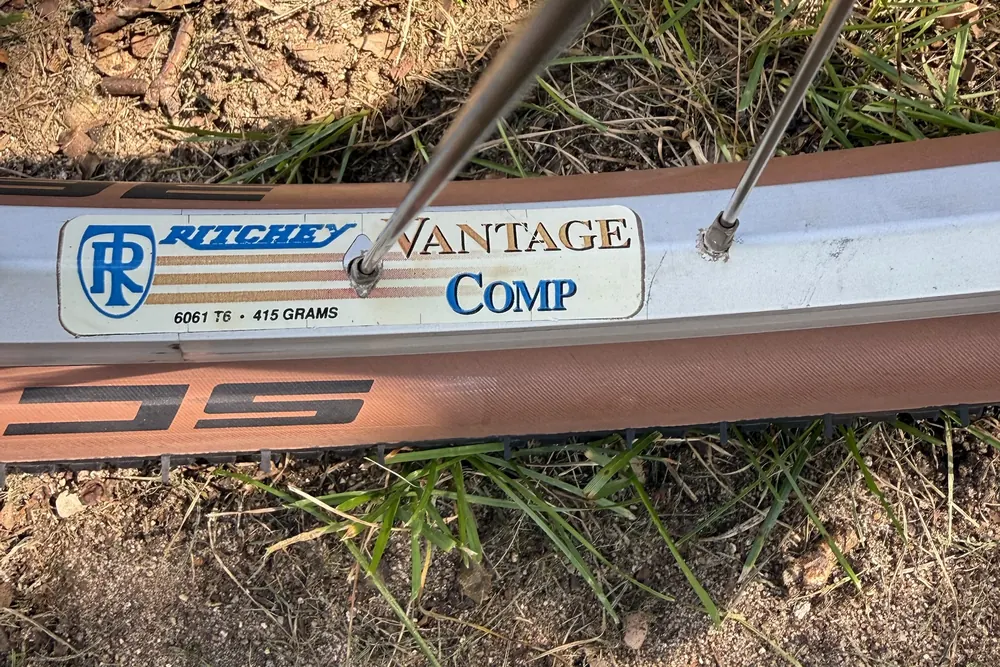
A lot of it matched. The Ritchey Vantage Comp rim up front, its sticker still reading 6061 T6 · 415 grams. Deore LX hubs, derailleurs, crank, bottom bracket. The Deore thumb shifters. The CODA brakes. What I'm pretty sure were the original CODA Torpedo grips. The CODA Slim-Cam seat clamp, which I didn't even know had a name until I read it off a 1993 catalog page. And the same 13–30 seven-speed Hyperglide cassette that came home rusted solid.
Even the paint has a name: Diamond Black metallic fade to Iceland Green. That's a lot of words for green. I'm keeping all of them.
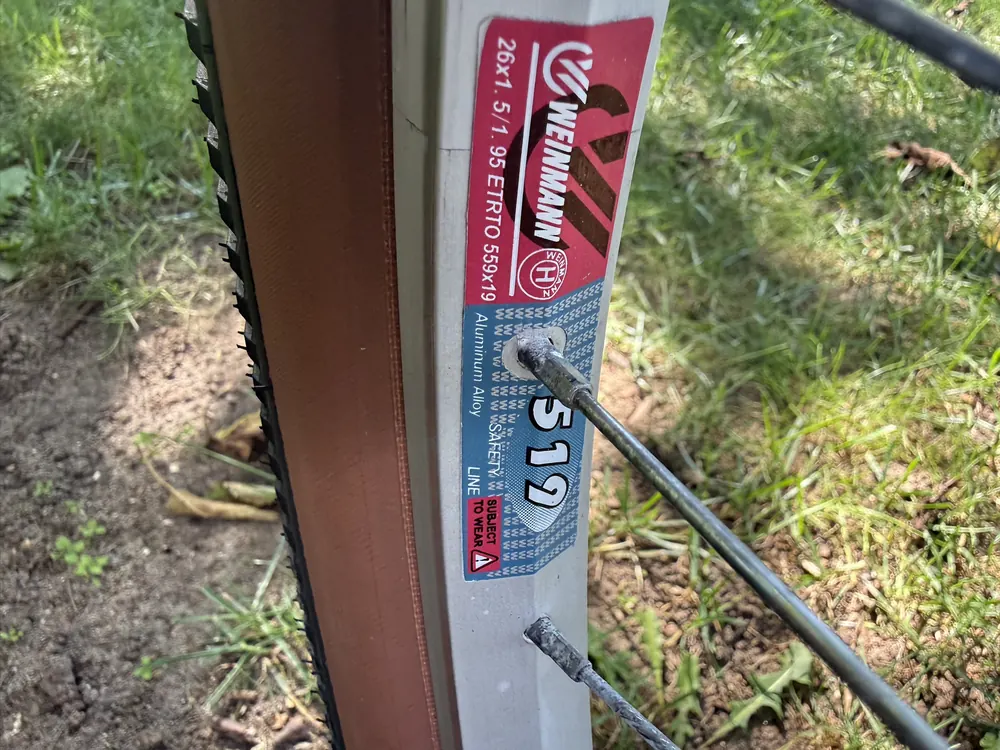
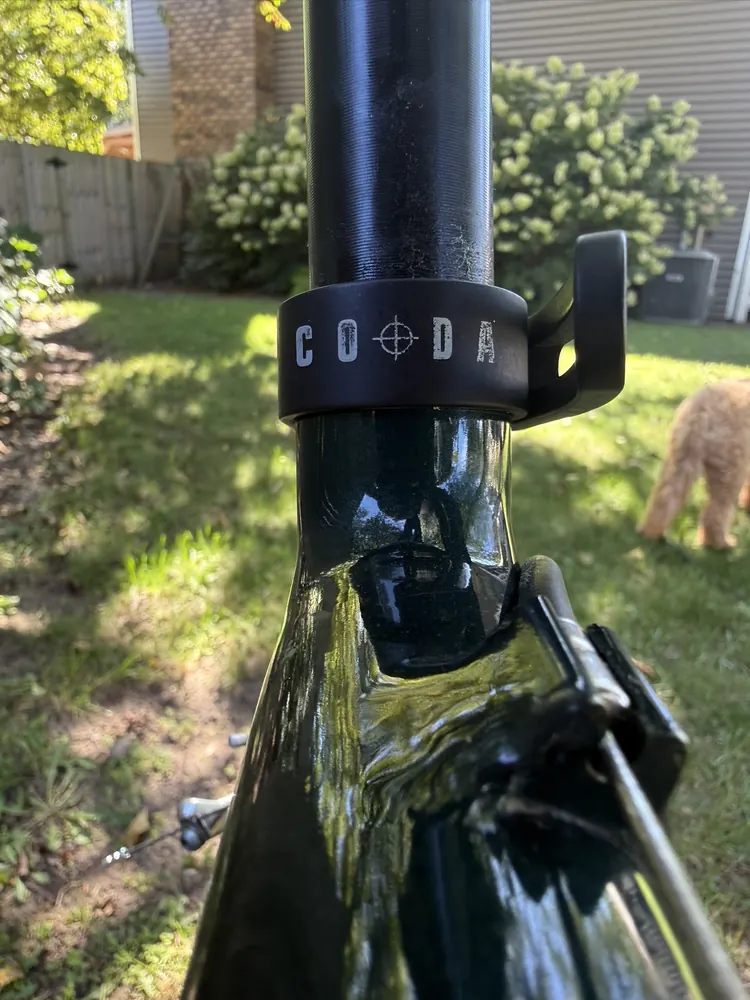
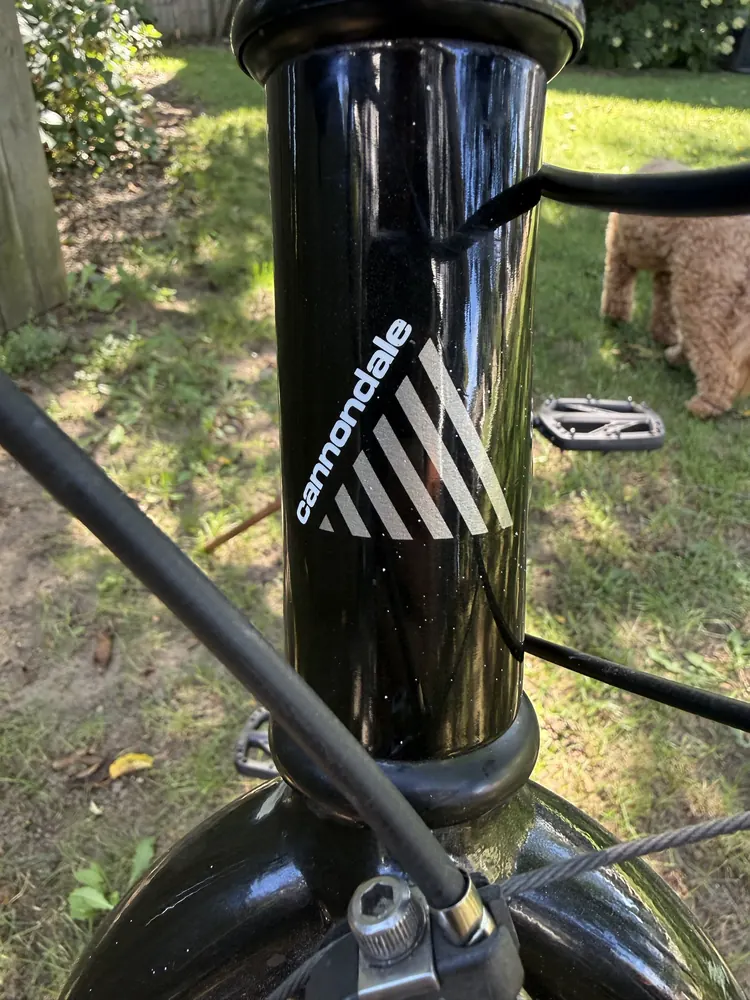
Some things didn't match, which is its own kind of history. The Tioga pedals, the Vetta saddle and the tan-wall Ritchey tires were long gone. So was the rear Ritchey rim. The back wheel runs a Weinmann 519 now. Somebody needed a new rear wheel at some point, and kept riding.
That leaves the fork. The catalog says all-aluminum. The magnet says steel steerer. Two ways that could happen:
The serial number should settle it. It doesn't, yet.
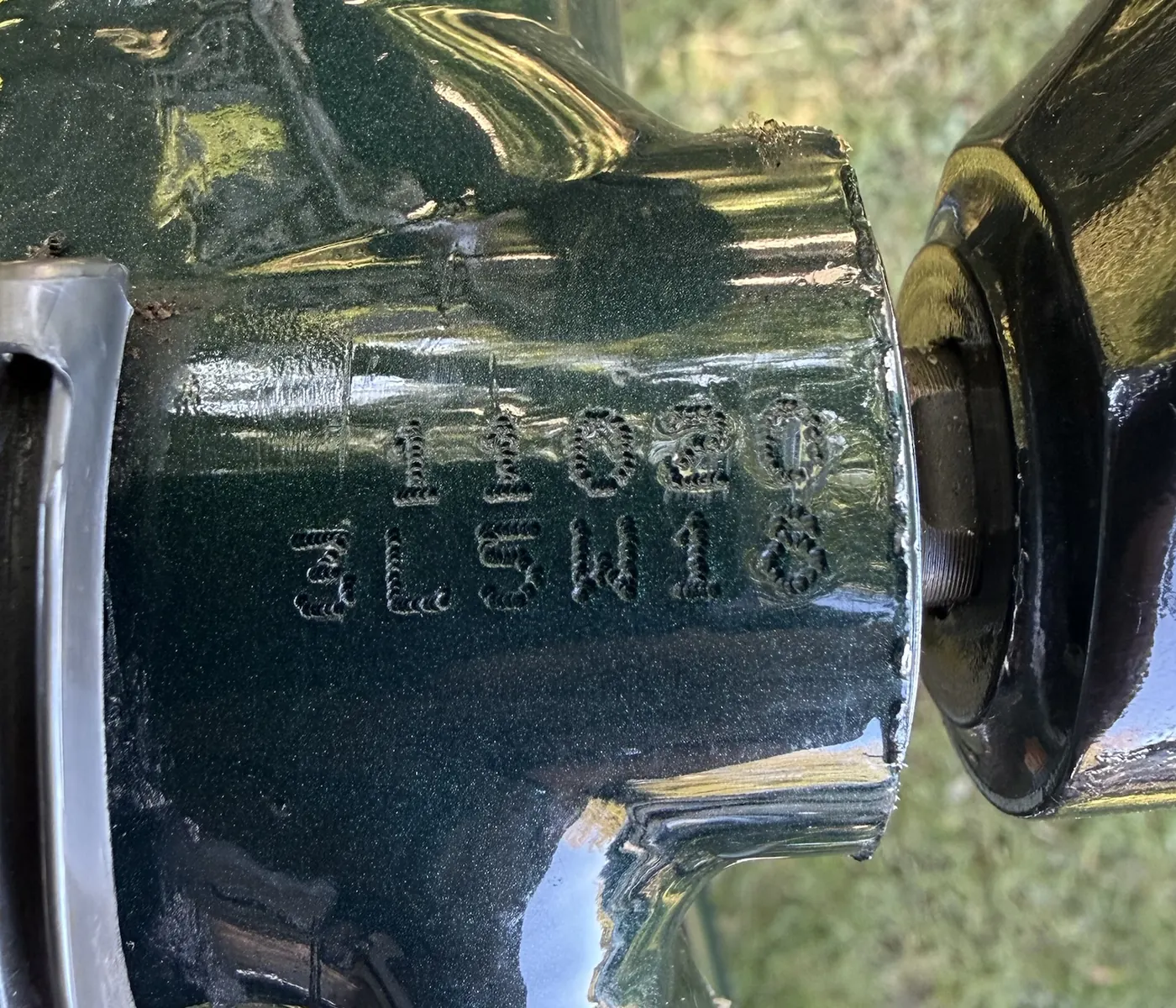
It's stamped into the bottom bracket in two lines, with that first 3 hiding under the plastic cable guide until I pulled it back. The 3 might mean 1993. The 5 might mean 135 mm rear spacing, the way it did on Cannondale's earlier serials. The L and the W, I've got nothing. And if the 18 is a frame size, it didn't get the memo either. This is a 20. And there's more stamping on the other side, something like ED BE39, which could be a date or could just be the start of the paint code, EDG.
Here's where it stands:
- ConfirmedAluminum blades, steel steerer. Threaded 1¼-inch. Paint and decal match the frame. The 1993 catalog lists this model in this color and size.
- LikelyA 1993 M700. Fork original to the frame. A lot of the original parts still on it.
- Still openWhere the steel steerer came from, and what the serial actually says.
If you know how to read a 1993 Cannondale serial, or you've got a '93 M700 and know what's in your fork, I'd really like to hear from you.
The stem
The fork caused one more problem. Cannondale used a bigger 1¼-inch head tube on these bikes, so the quill stem is 28.6 mm, stamped right on the old stem and confirmed with calipers at 28.64.
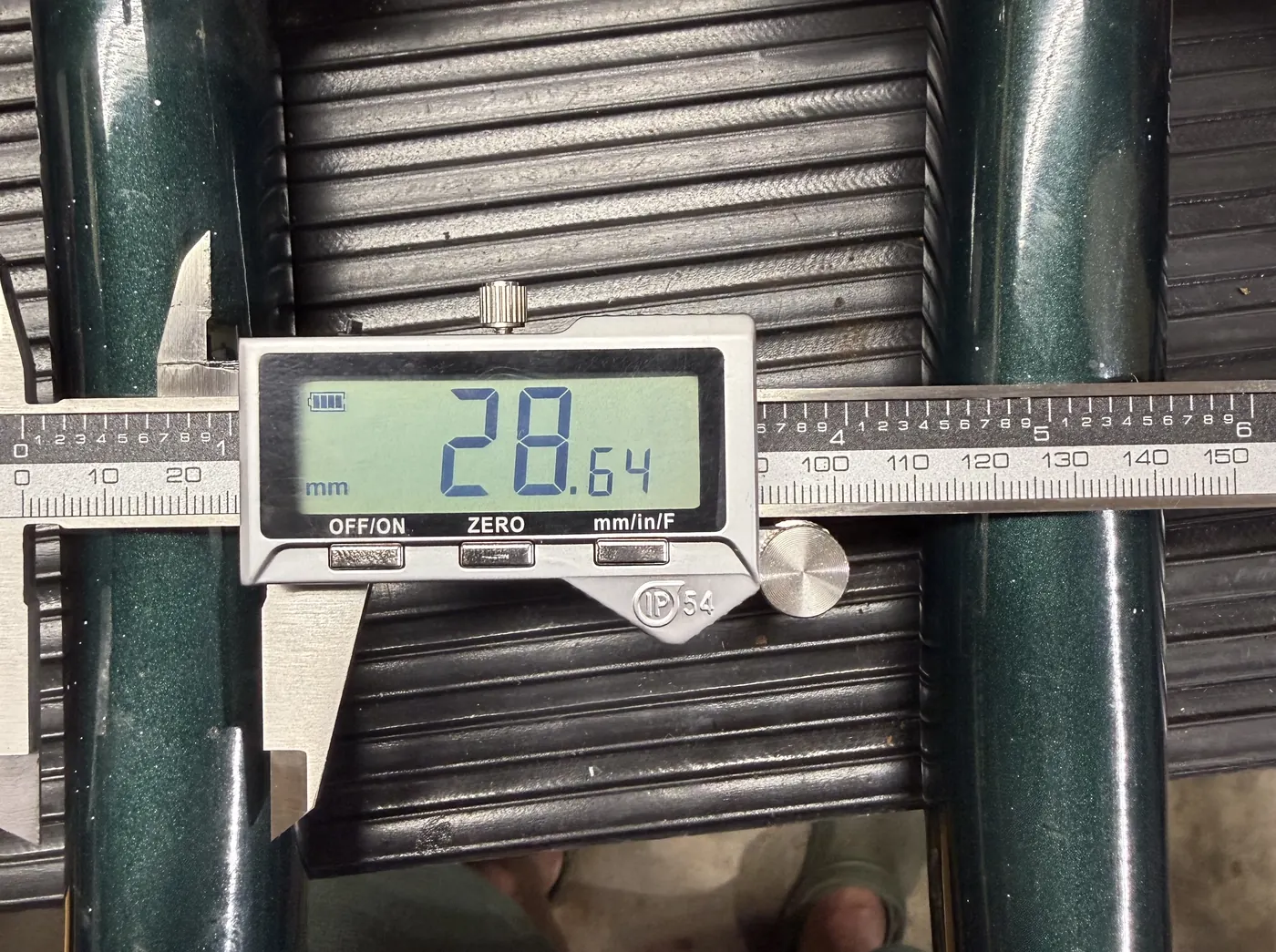
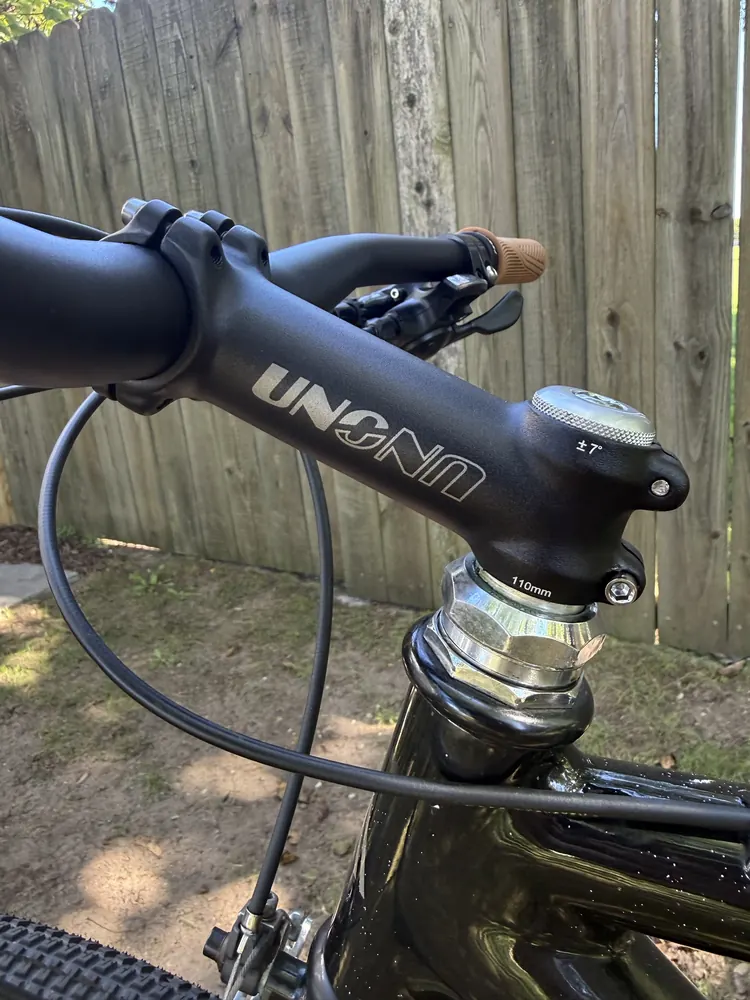
Most quill-to-threadless adapters are made for a standard 1-inch fork. I knew going in the usual one wasn't going to fit. The one that does is the Nitto MTC-023. It took a while to find and cost more than the common adapter, but it's Nitto, and this bike deserved a good one.
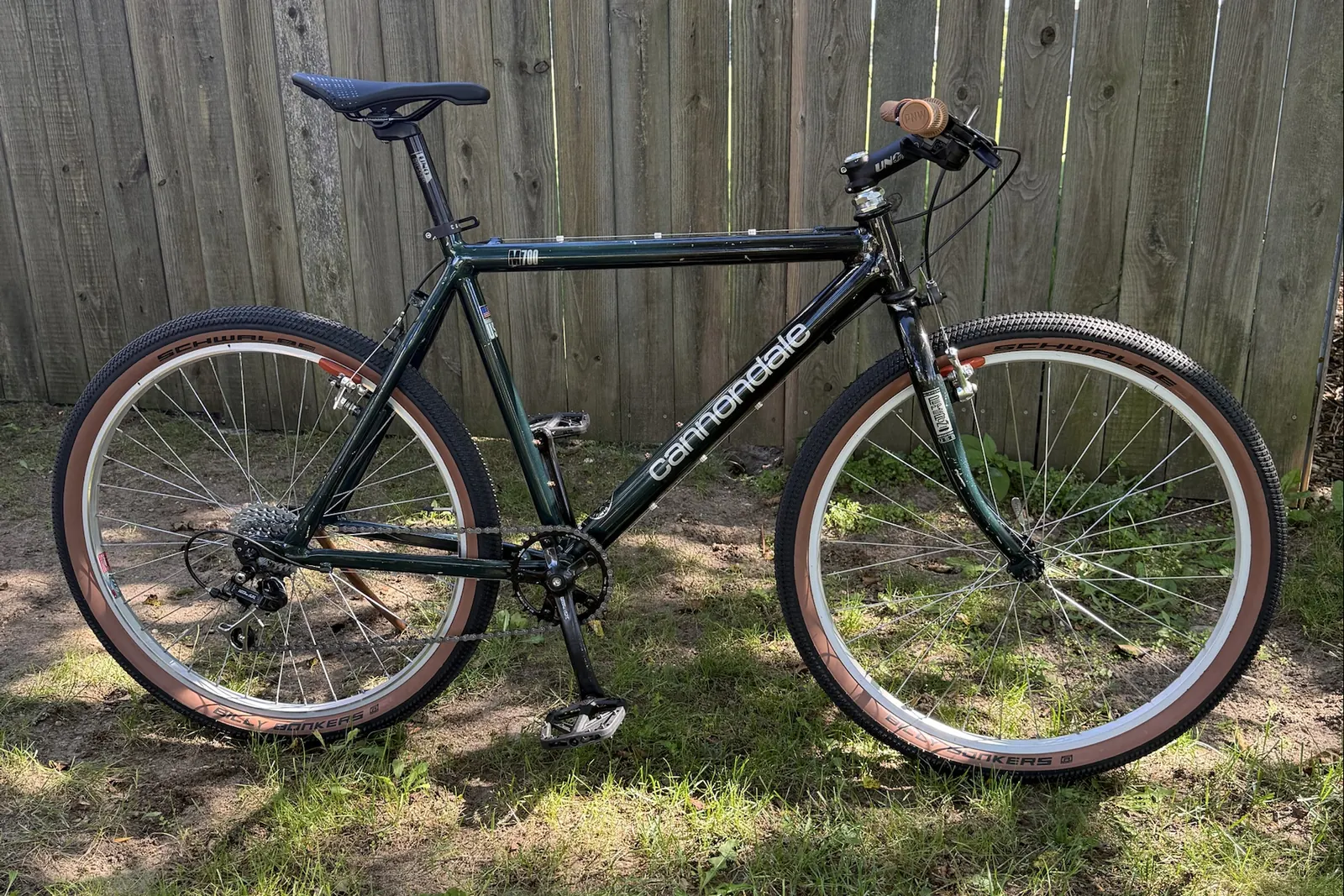
What I changed
I wasn't going for factory original. I wanted a bike I'd actually ride, keeping what still worked and using good parts where something had to change. A few of those came from small brands I found along the way and really like.
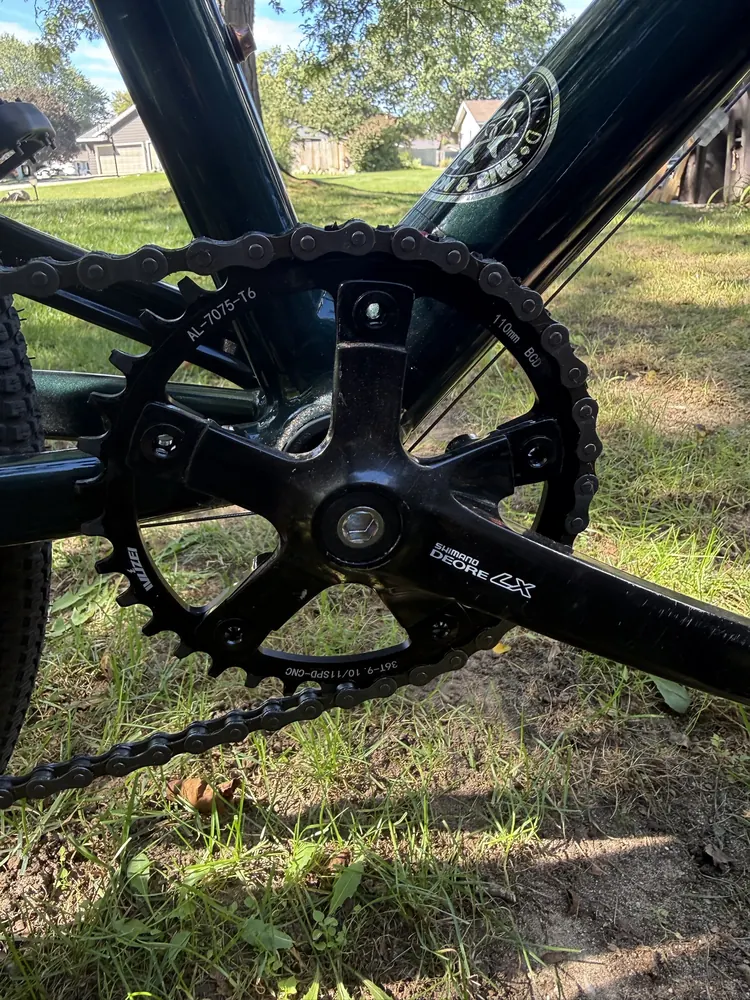
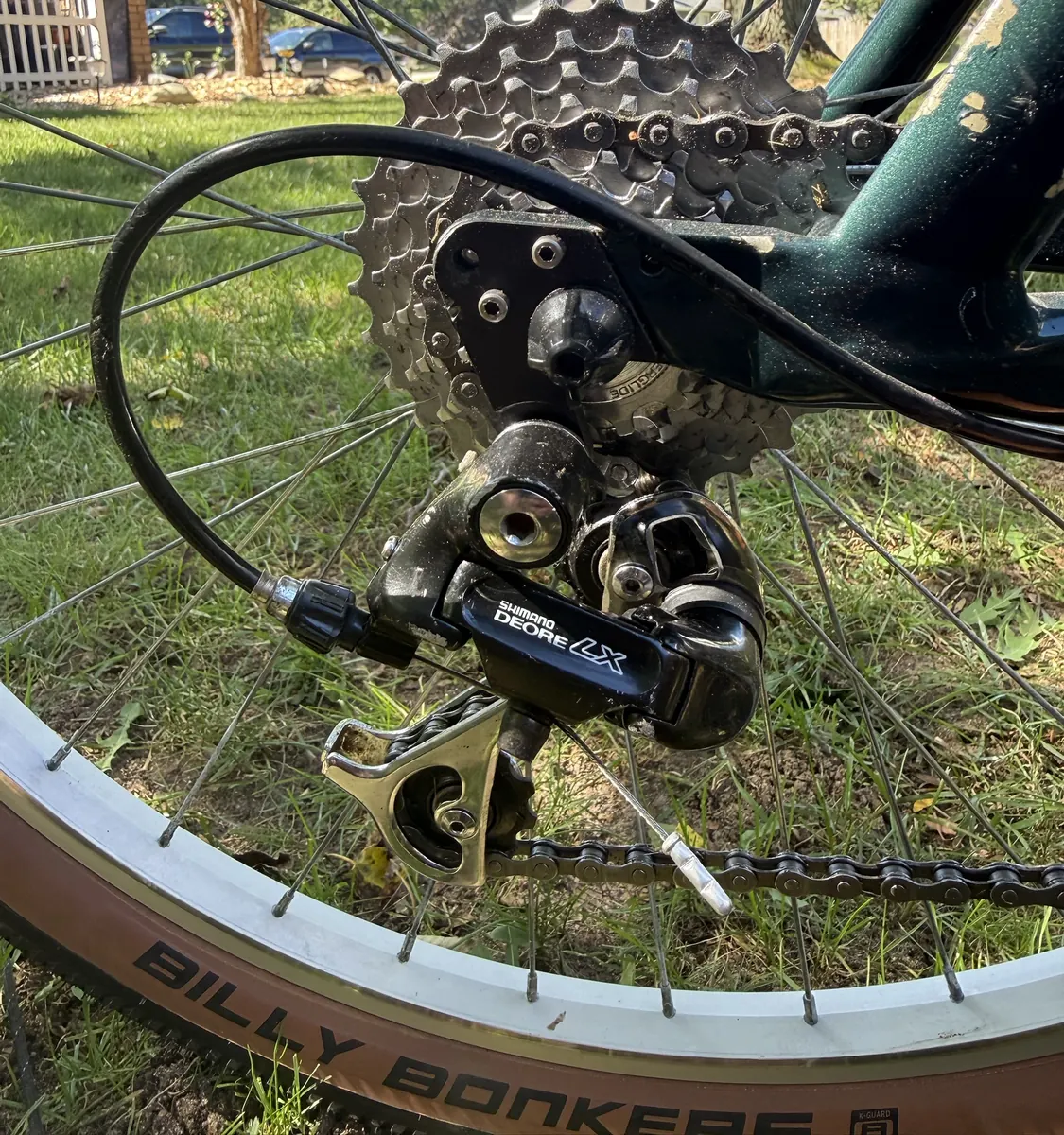
- 1×7Took off the front derailleur and the triple. Kept the Deore LX crank arms and put on a single 36-tooth Wuzei narrow-wide ring, the same size as the original middle ring. New Shimano chain. Kept the Deore LX rear derailleur and swapped the old thumb shifter for a Shimano SL-M315 trigger. Seven gears is plenty for what I'm doing, and I love how clean it looks with one ring up front.
- CockpitA wide Specialized bar I had sitting at home, a UNO stem to match the UNO seatpost, PNW Loam grips, Shimano Sora levers, and a new saddle.
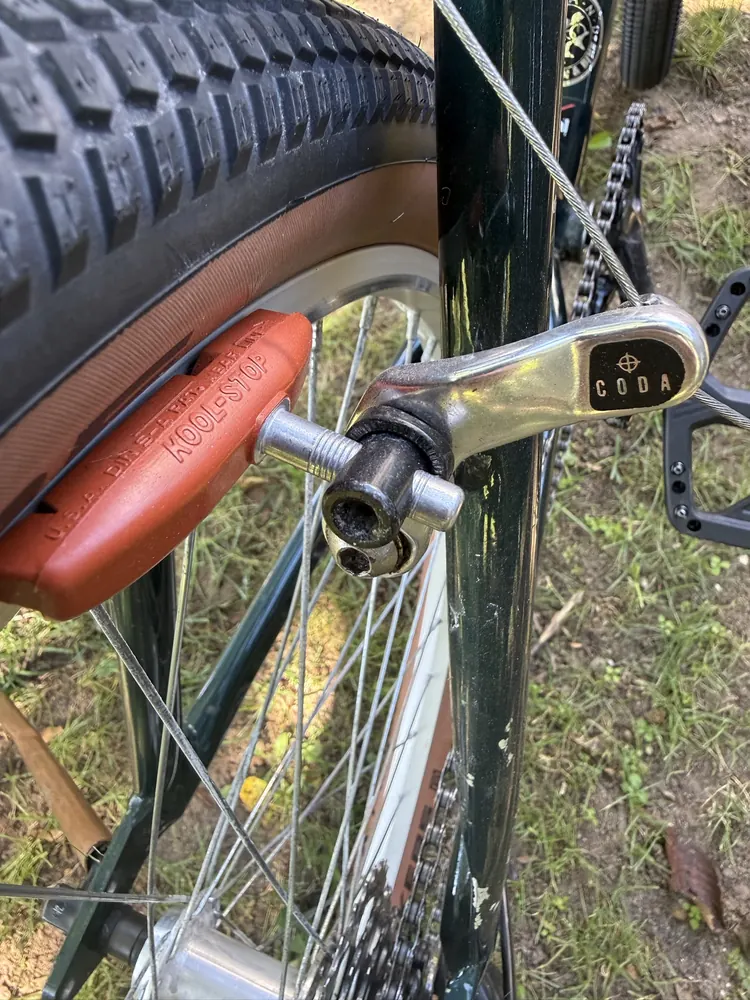
- BrakesKept the CODA cantilevers and put Kool-Stop Thinline pads on them. Kool-Stop was the find of this build.
- Wheels and tiresKept both wheels. Put on Schwalbe Billy Bonkers, 26 × 2.1, tan wall. I didn't plan it, but the catalog bike ran tan walls too.
- PedalsPNW Range Composite.
- The boring stuffEvery cable and housing replaced. New bottle cage bolts. And the original cassette, which took a lot of scrubbing, but it cleaned up really nice.
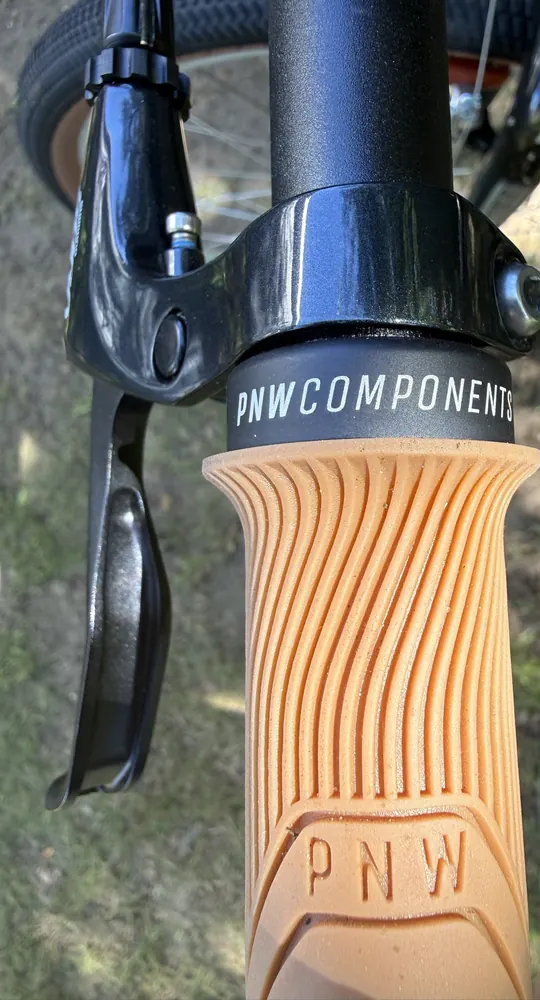
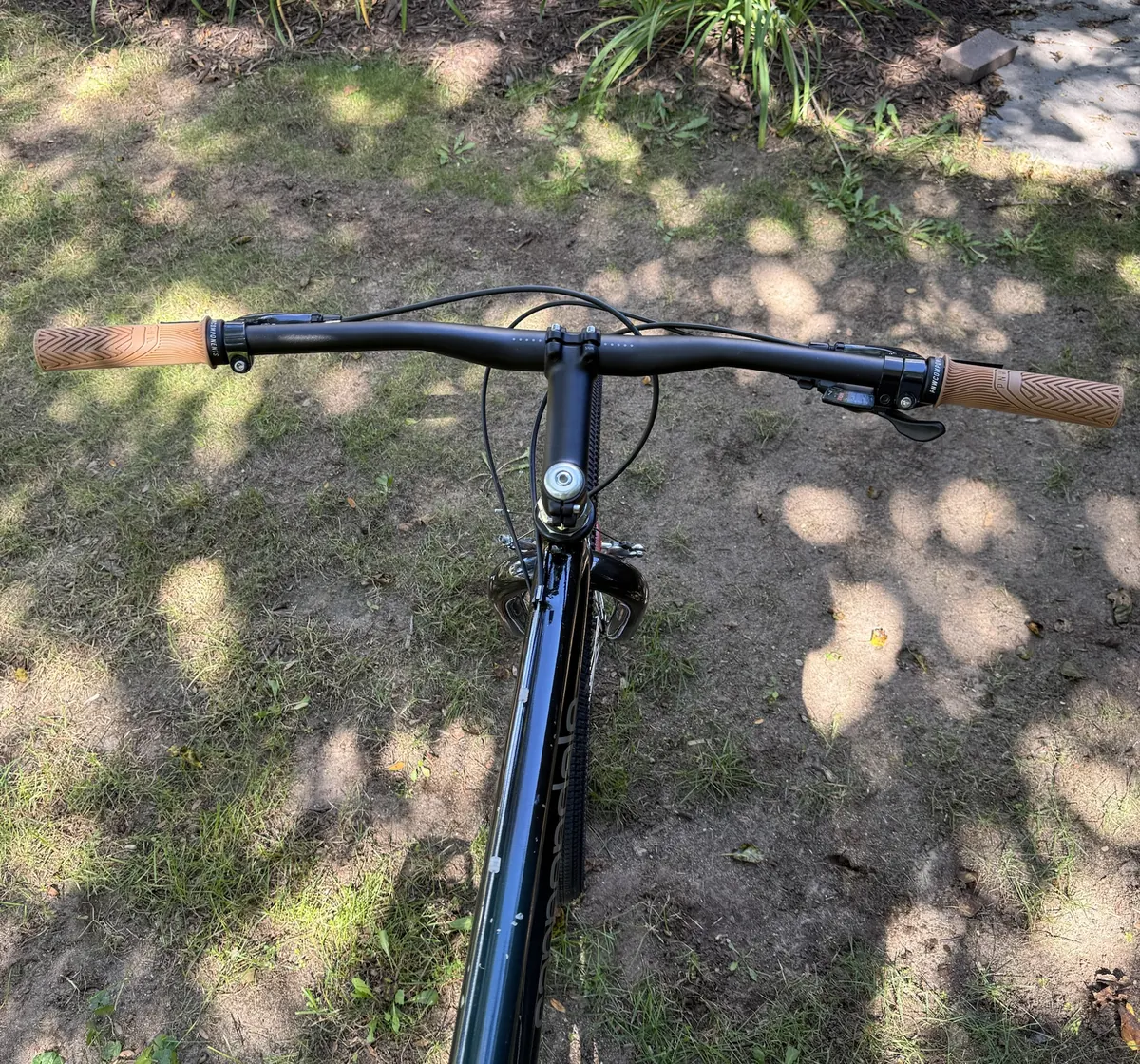
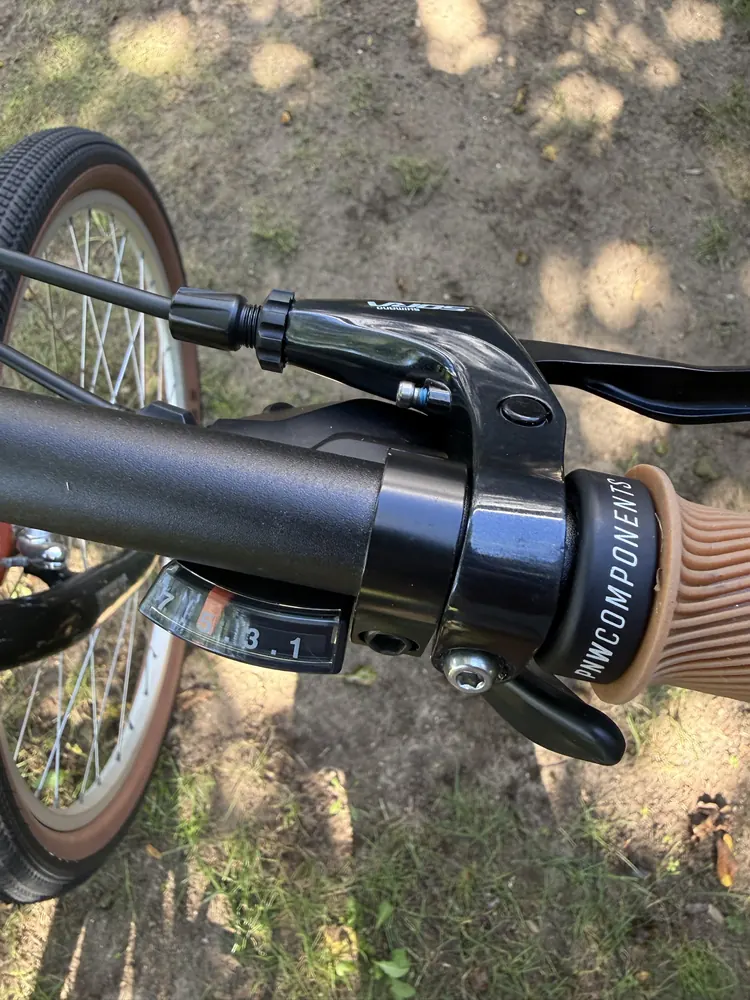
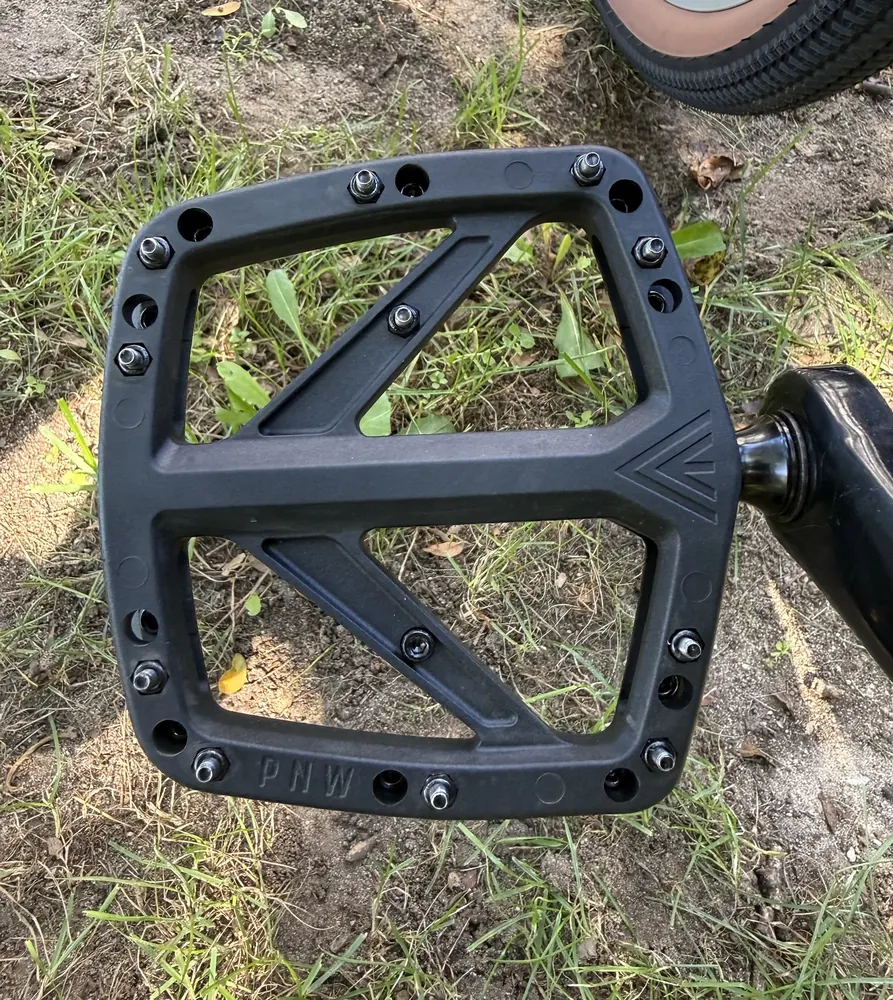
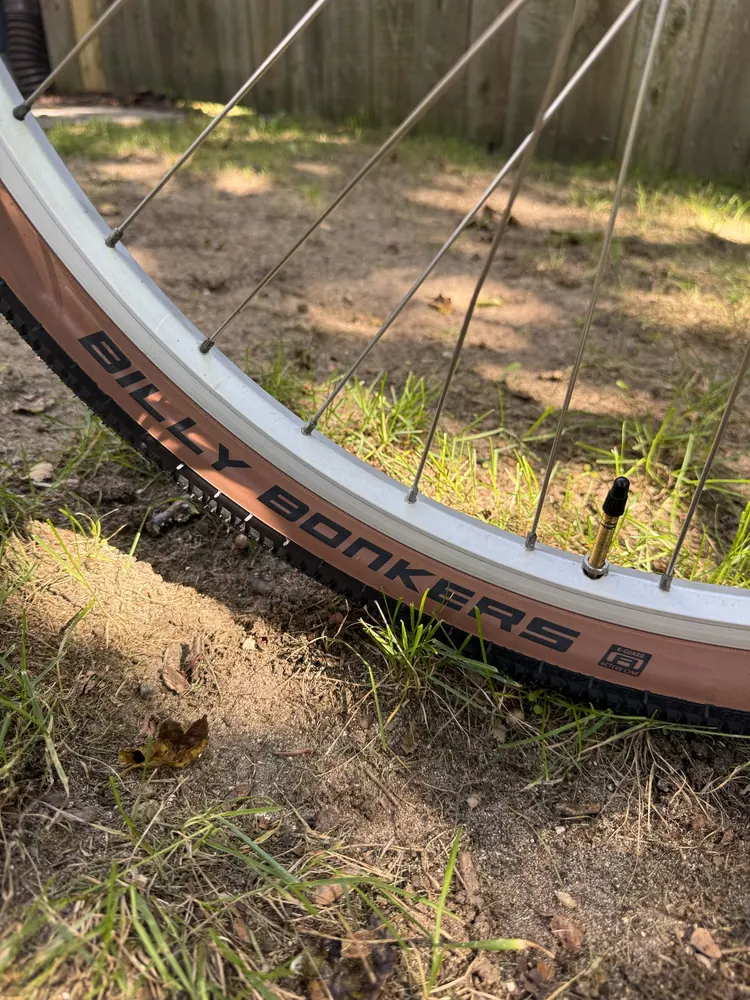
Nitto, PNW and Kool-Stop are worth knowing about if you're building up an old bike.
Nitto
MTC-023 quill adapter. The part that fit when the usual one couldn't.
PNW Components
Loam grips and Range Composite pedals.
Kool-Stop
Thinline cantilever pads. The find of this build.
How it rides
It's been a blast. It rolls super smooth, shifts clean, and feels lighter than a 1993 mountain bike has any right to. I've been riding it around town, and my daughter and I have taken it to the paved pump track at the bike park, where a rigid aluminum Cannondale turns out to be a lot of fun. A real trail is next.
At 20 inches, it's a little small for me. For now it stays.
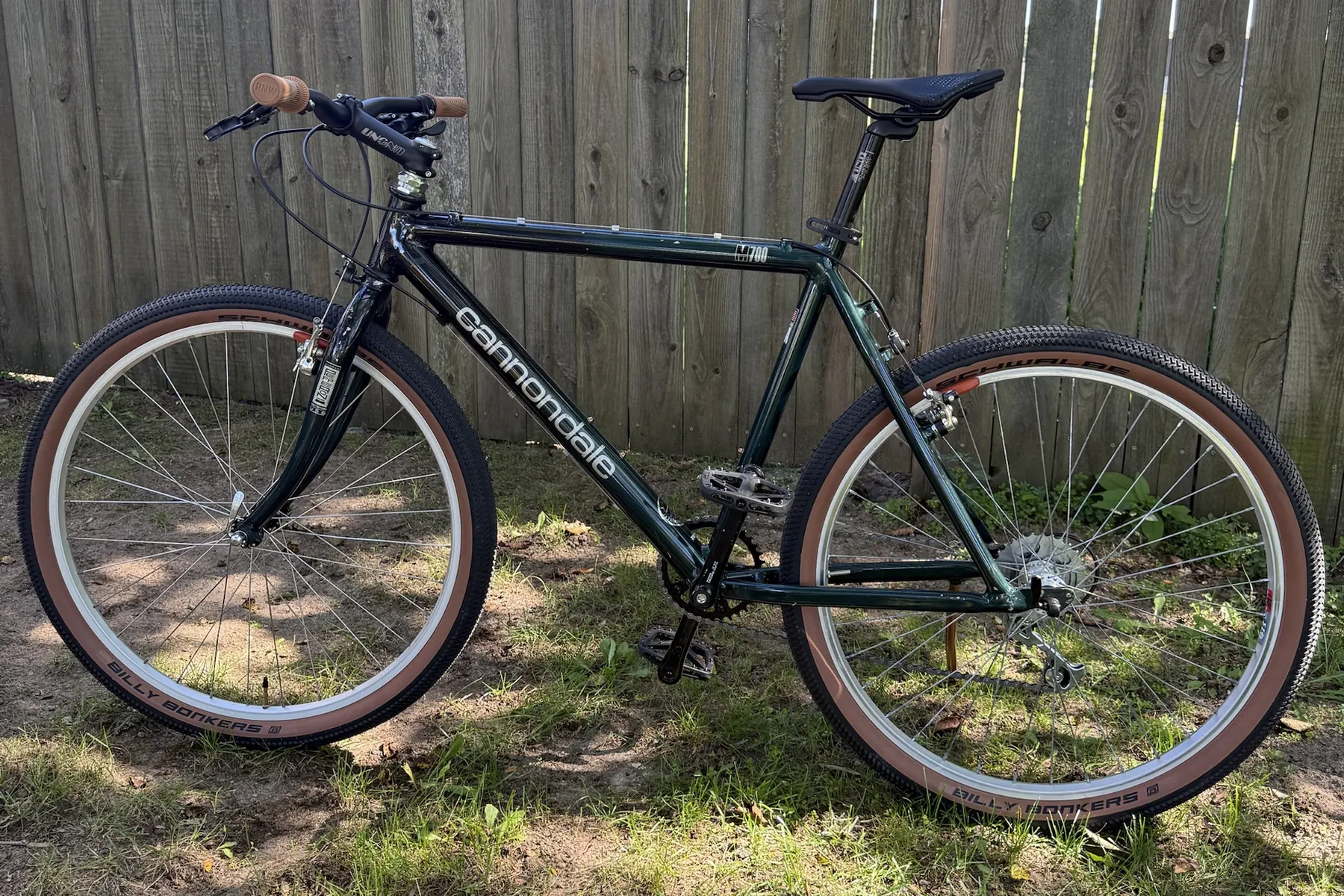
The first thing anyone notices is still the fork. I know more about it than I did. Not everything. If you know the rest, say howdy.